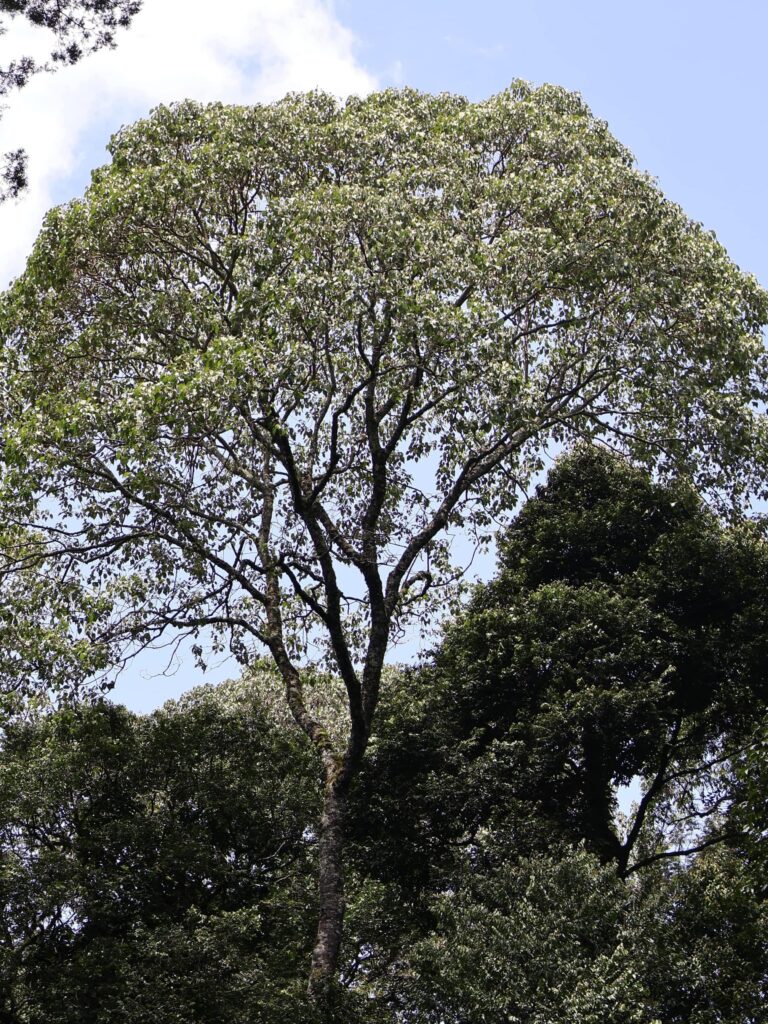
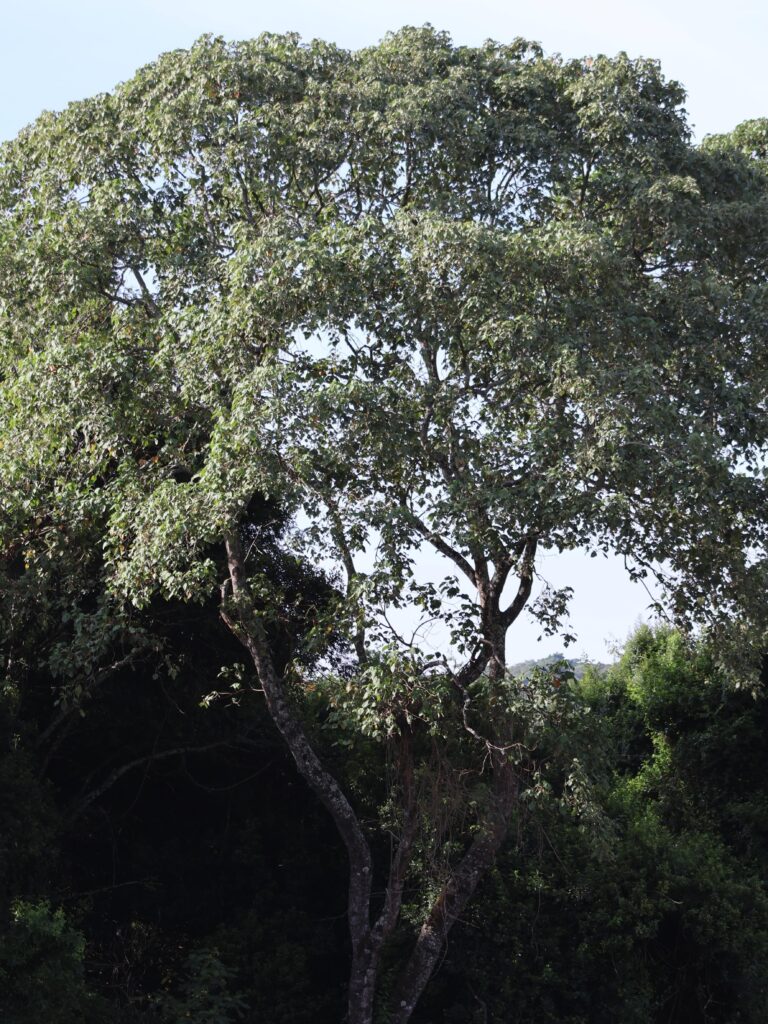
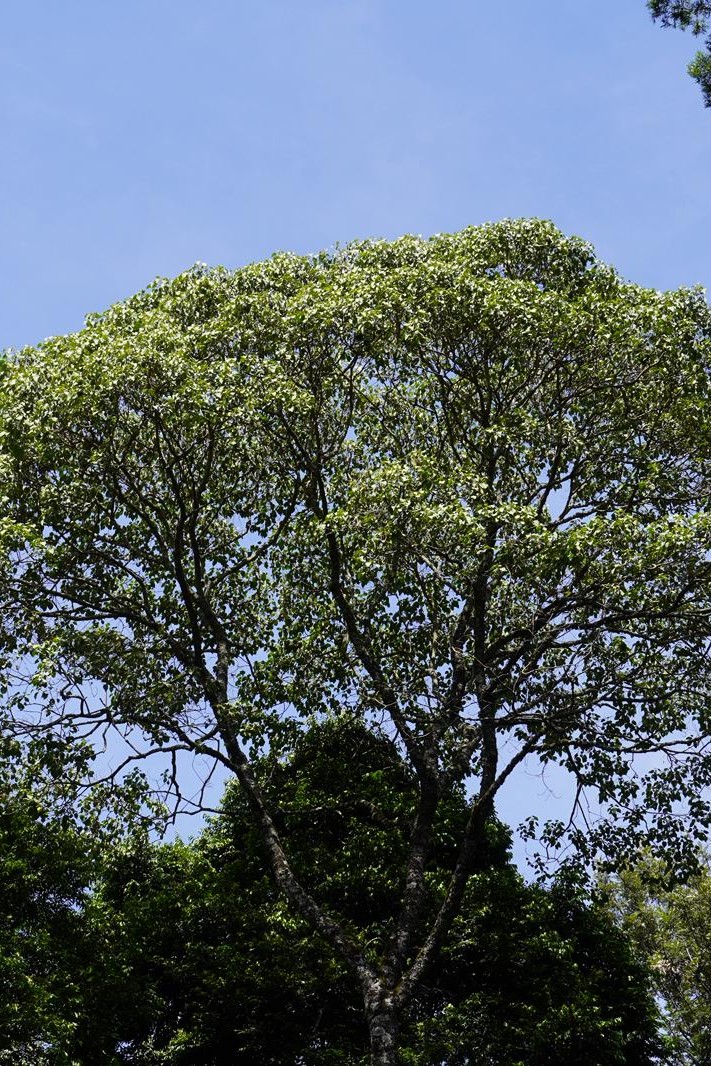
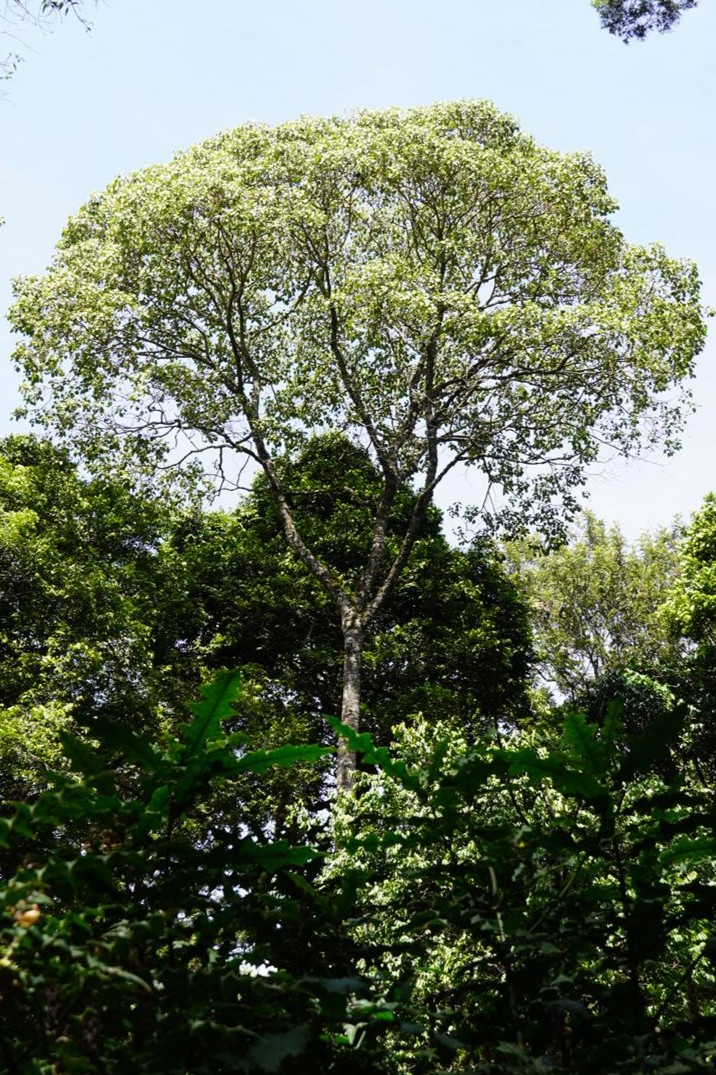
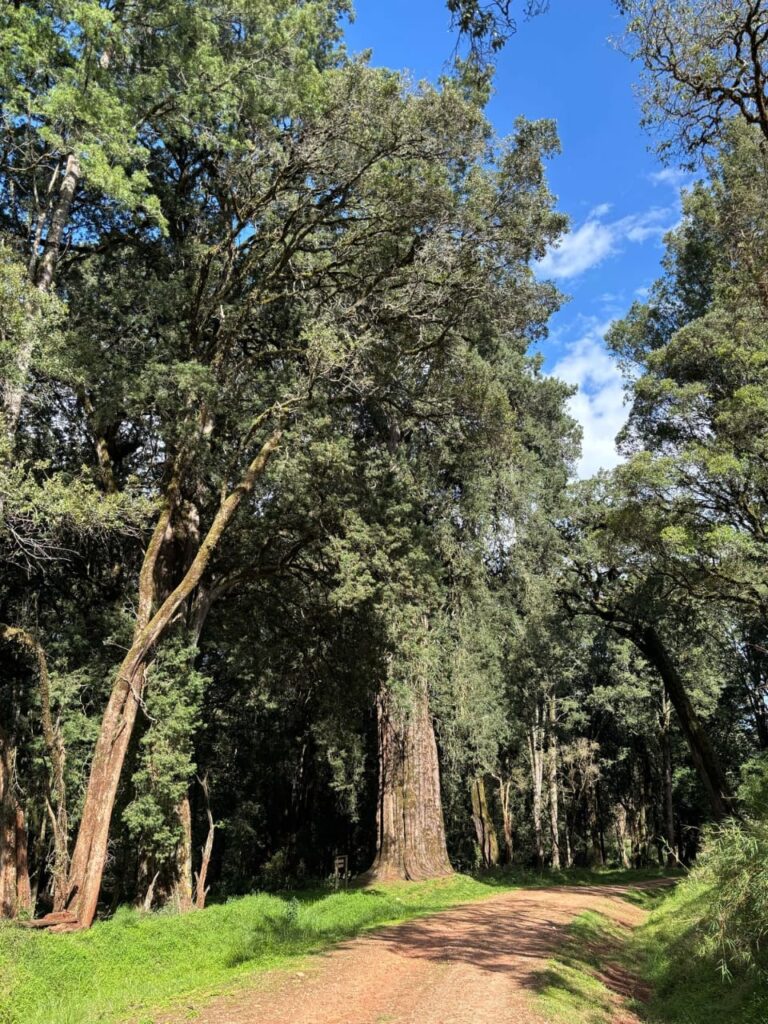
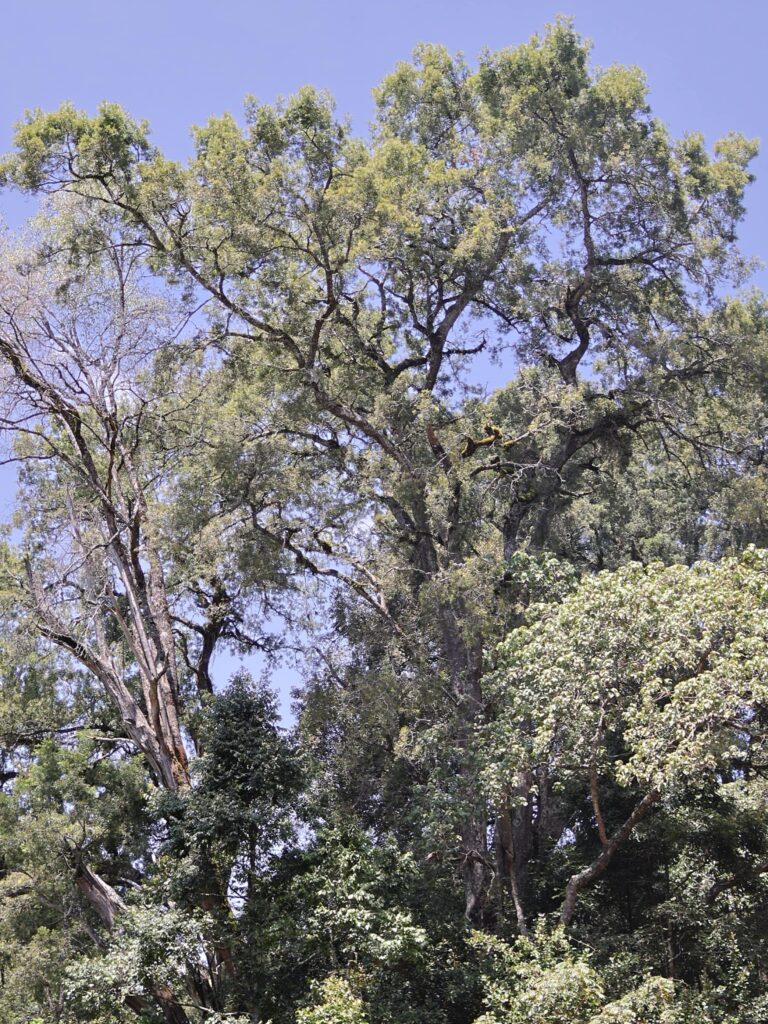
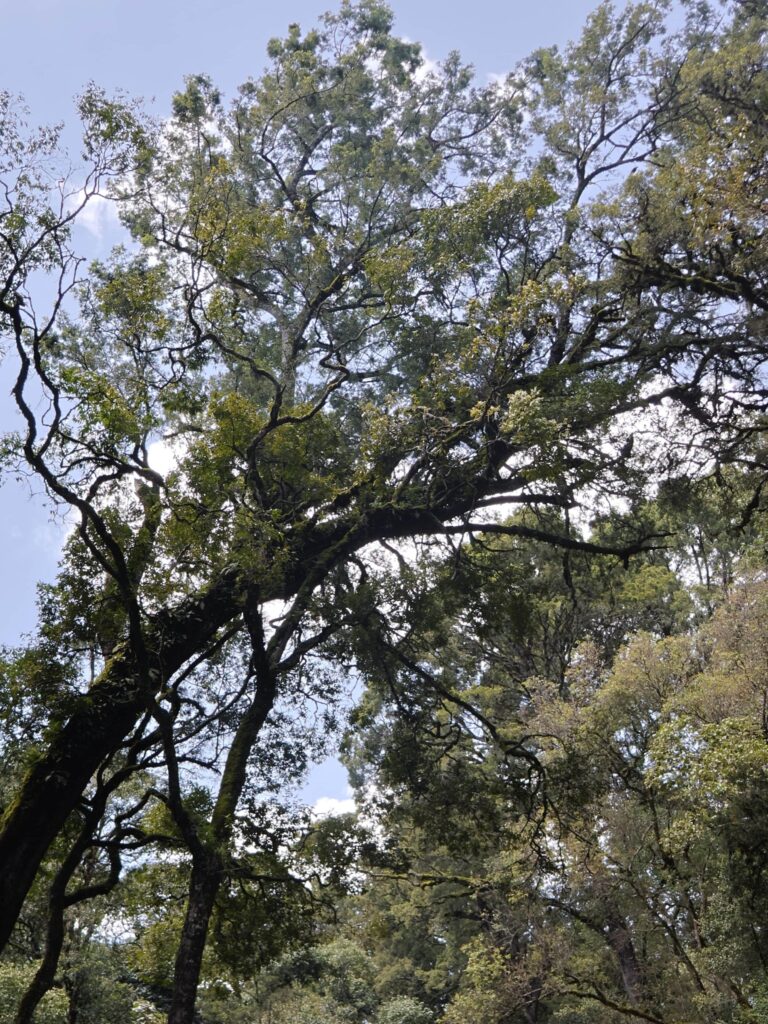
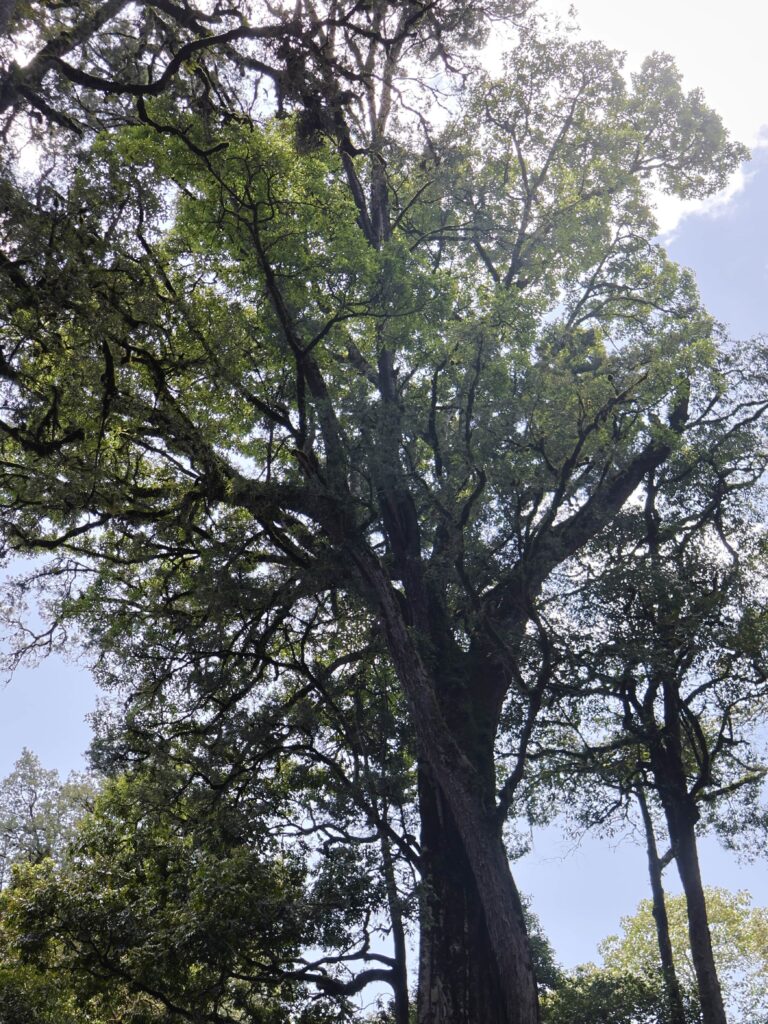
Mount Elgon National Park in Kenya is home to a rich and diverse array of flora, shaped by its high-altitude forests, volcanic soils, and varying climate zones. As you explore the park, you’ll move through lush montane forests filled with towering cedar, podo, and olive trees, followed by bamboo belts that sway gently along the slopes. Higher up, the landscape opens into unique moorlands dotted with giant lobelias, everlasting flowers, and heathers that blanket the mountainside in soft hues. These distinct vegetation zones, which change dramatically with altitude, create a vibrant, ever-changing natural environment—perfect for scenic hikes, photography, and discovering plant species found nowhere else.
Trees
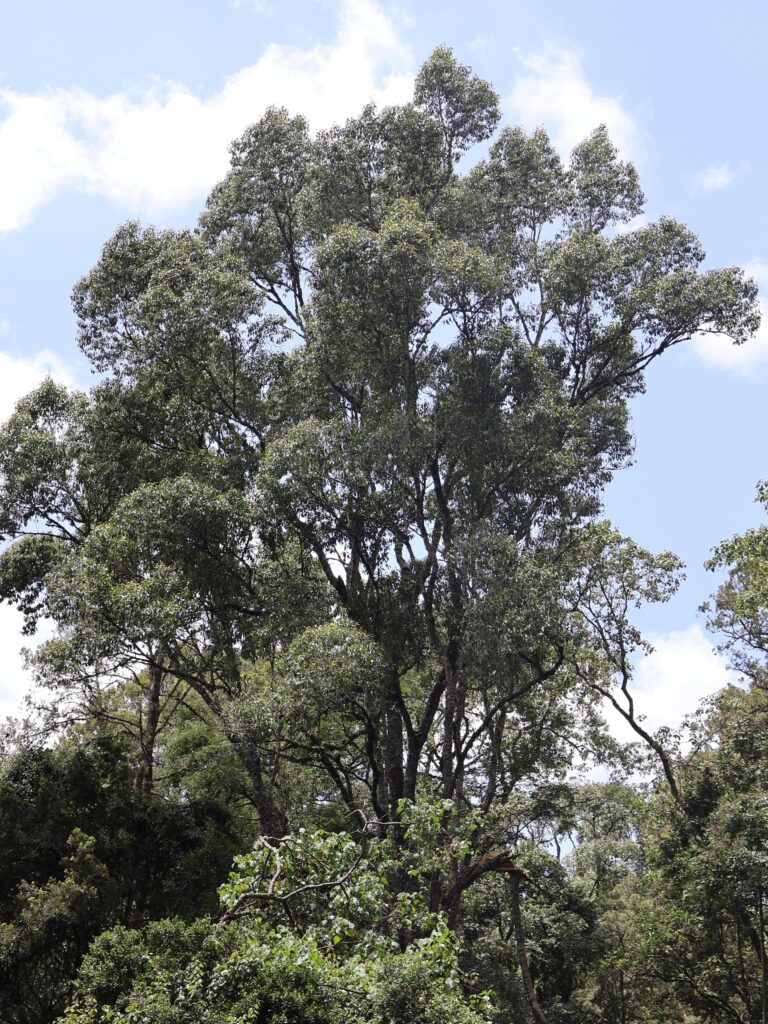
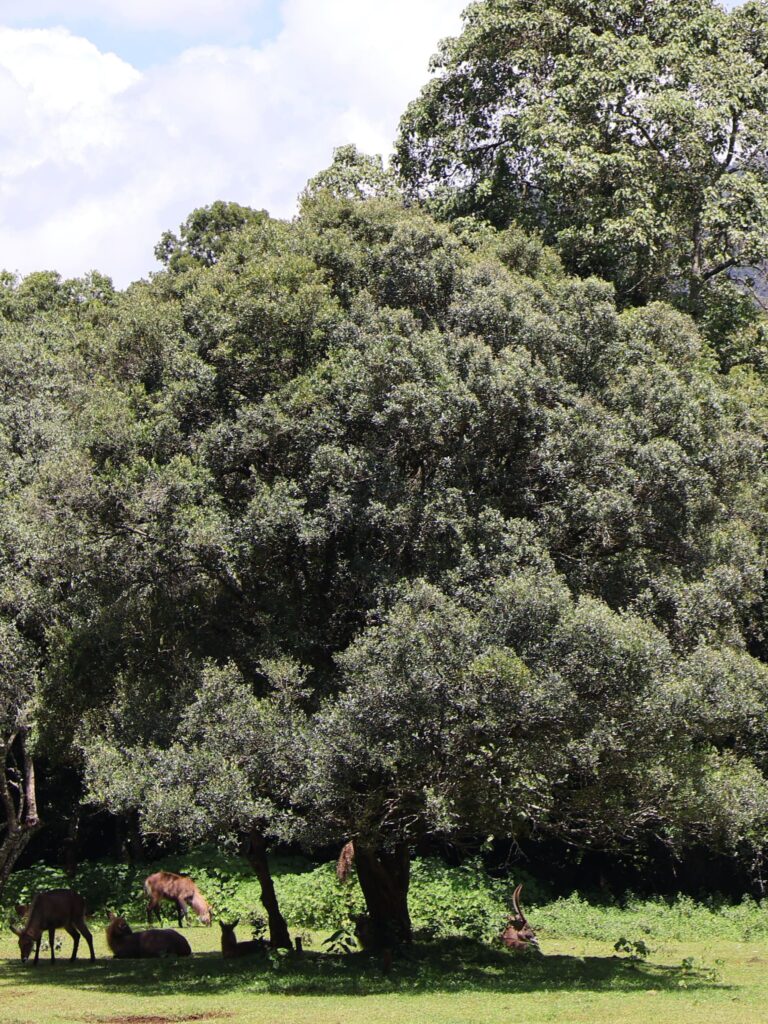
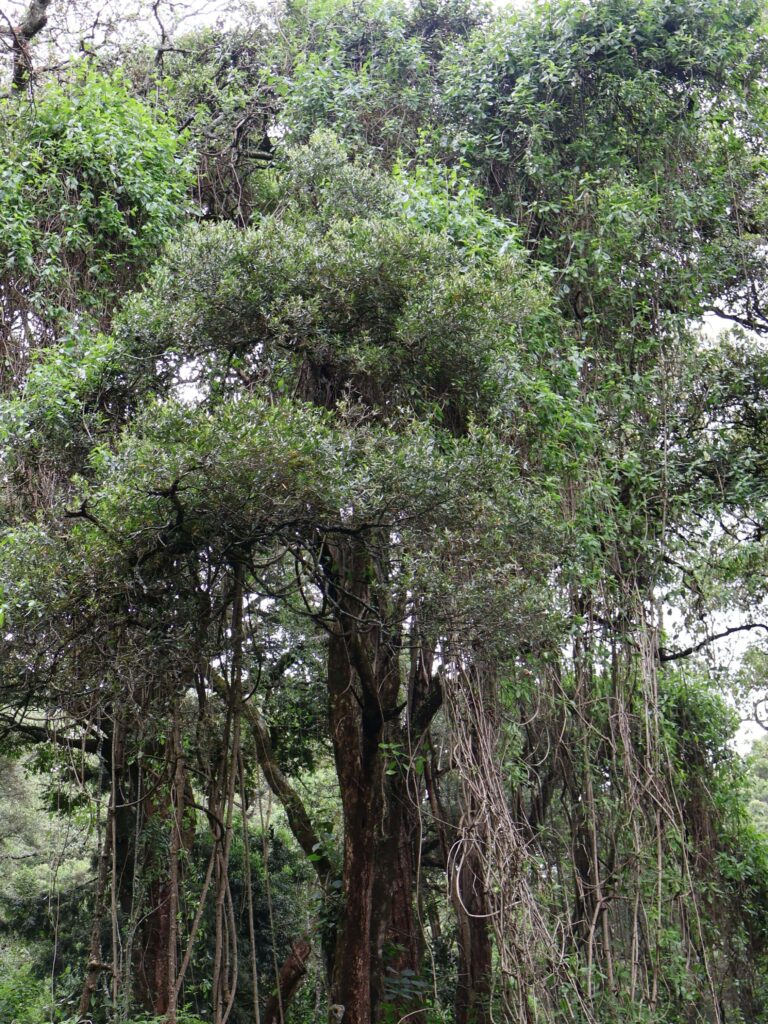
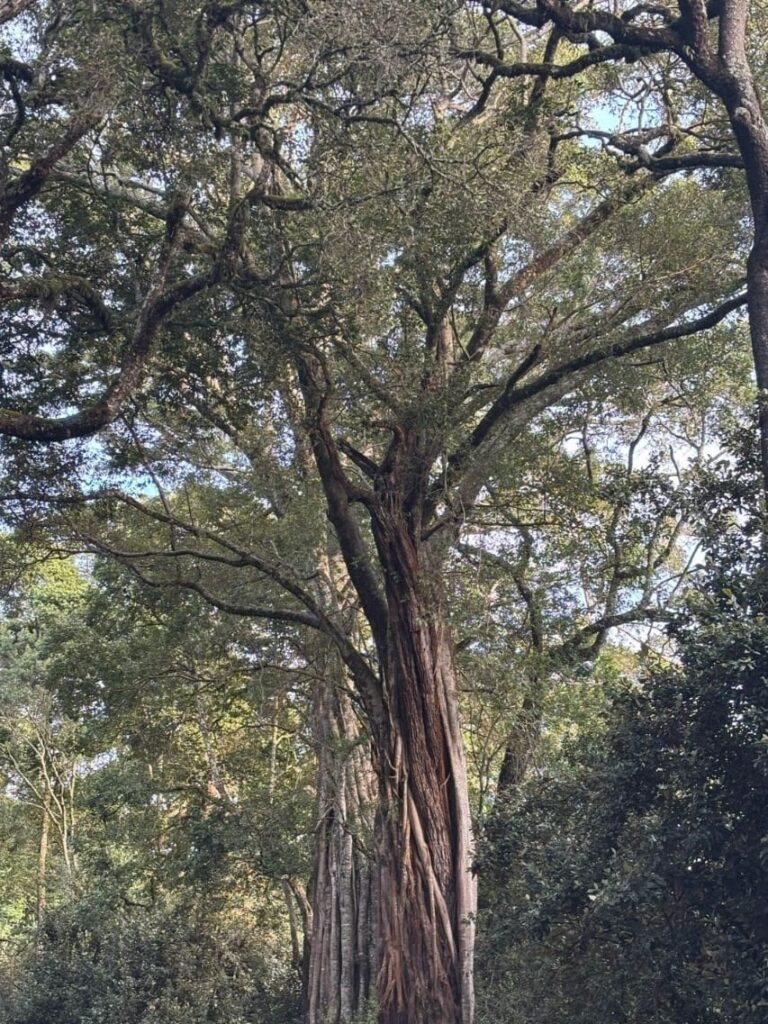
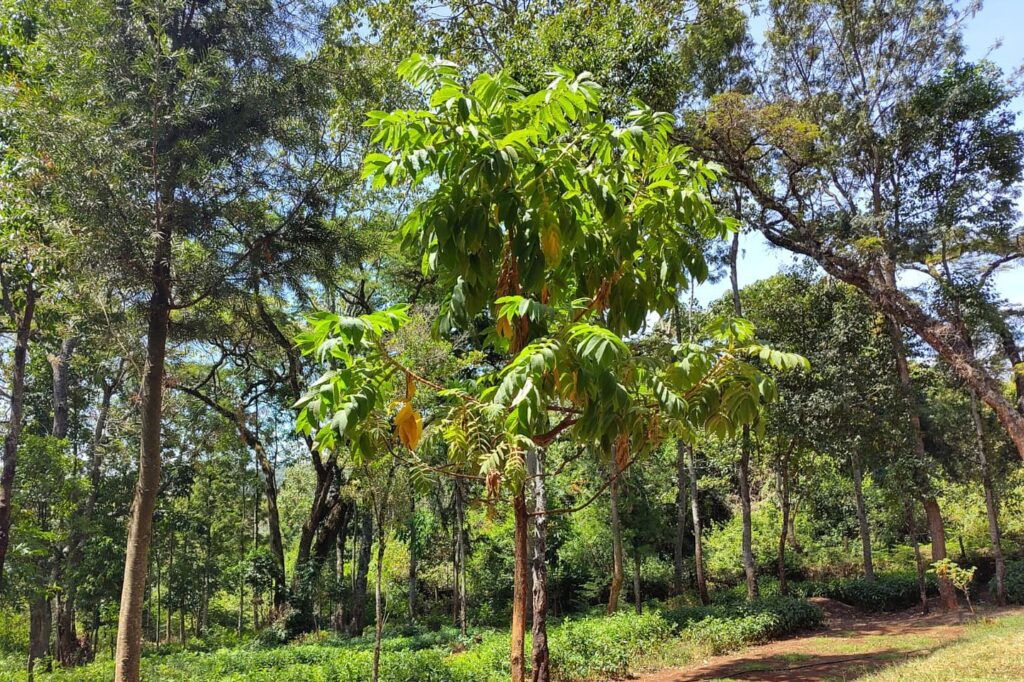
Mount Elgon’s forests are dominated by impressive highland trees that create a cool, green canopy for much of the park. In Mount Elgon there are about 100 different tree species, the most important ones are presented below. Here you’ll find majestic species such as African cedar, olive, and podo rising above the forest floor, along with fig trees and other moisture-loving varieties that thrive in the mountain’s rich volcanic soil. These towering trees not only shape the park’s serene atmosphere but also provide essential habitat for wildlife and a beautiful backdrop for hikes and nature walks.
Acacia
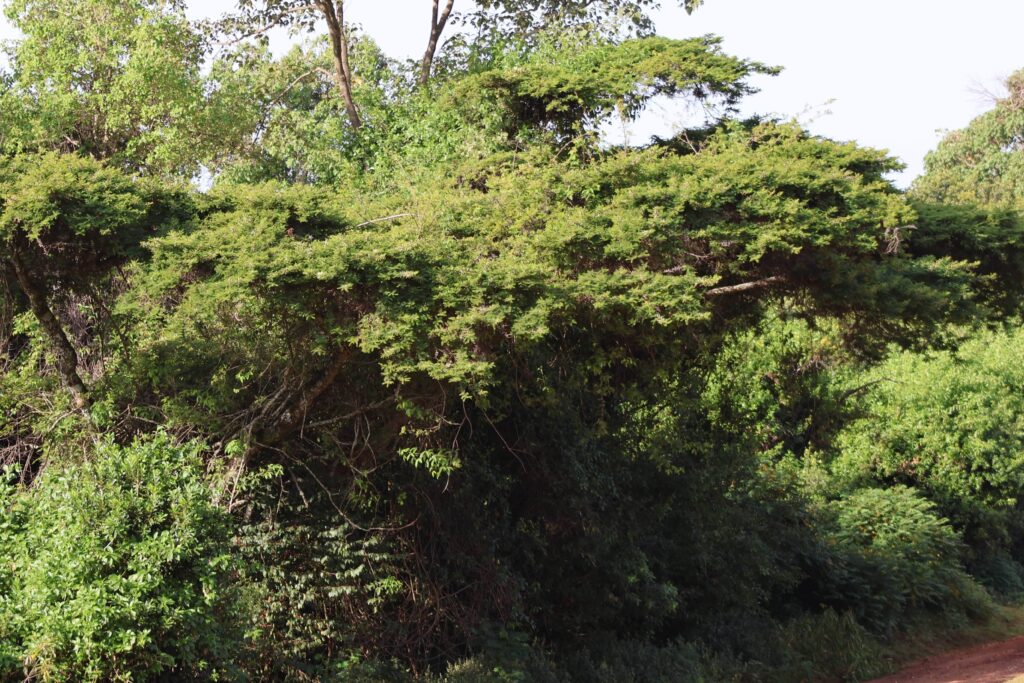
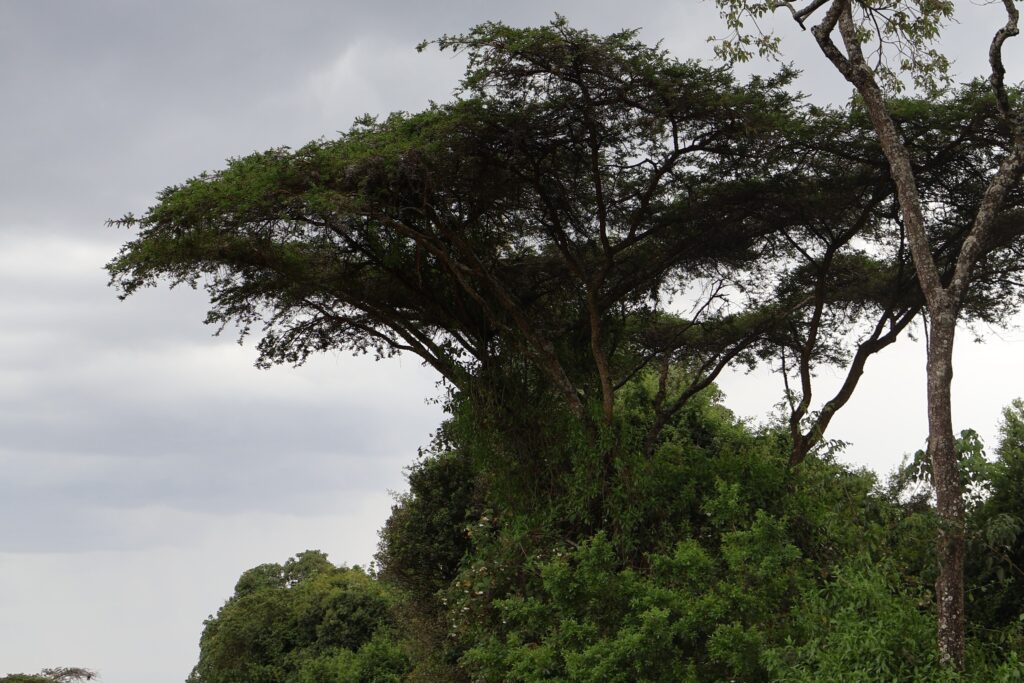
Acacia trees are a familiar and iconic part of Mount Elgon’s lower and mid-elevation landscapes. Known for their umbrella-shaped crowns, thorny branches, and feathery leaves, they thrive in sunnier, drier forest edges and open areas. On Mount Elgon, acacias provide important shelter and food for birds, insects, and grazing wildlife, while their nitrogen-fixing roots help enrich the soil for other plants. Their bright yellow or cream-colored flowers, which appear seasonally, add bursts of color to the forest and savanna margins, making them a striking and vital feature of the mountain’s flora. Moreover, it is an important food source for elephants because it contains 70% of their needed proteins.
Bamboo
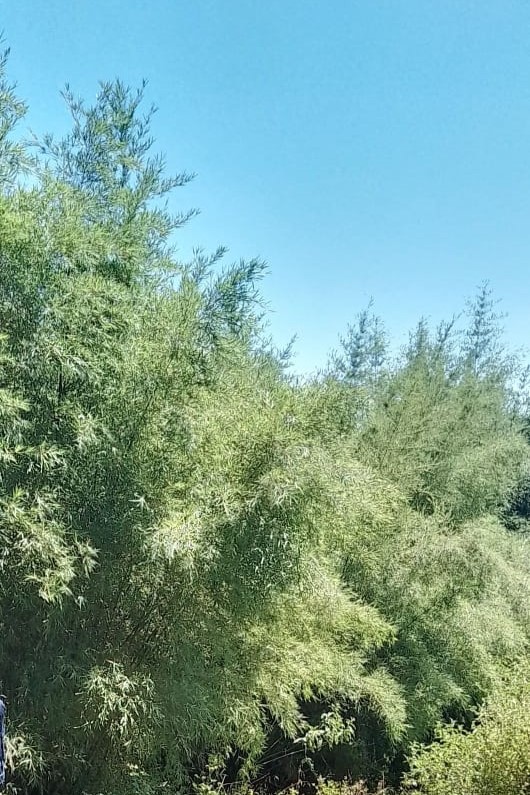
Bamboo forests dominate large areas of Mount Elgon, creating one of the mountain’s most striking and distinctive landscapes. Stretching across 2,500 – 3,000 m, these dense bamboo belts form a lush, green sea that can reach several meters in height, swaying gracefully in the mountain winds. The bamboo provides critical habitat for a variety of wildlife, including birds, monkeys, and even elephants, and acts as a natural corridor connecting different forest zones. Walking through these towering stands, visitors experience a serene, almost magical environment, where the filtered light, rustling leaves, and fresh mountain air combine to create one of Mount Elgon’s most memorable natural experiences.
Ceder
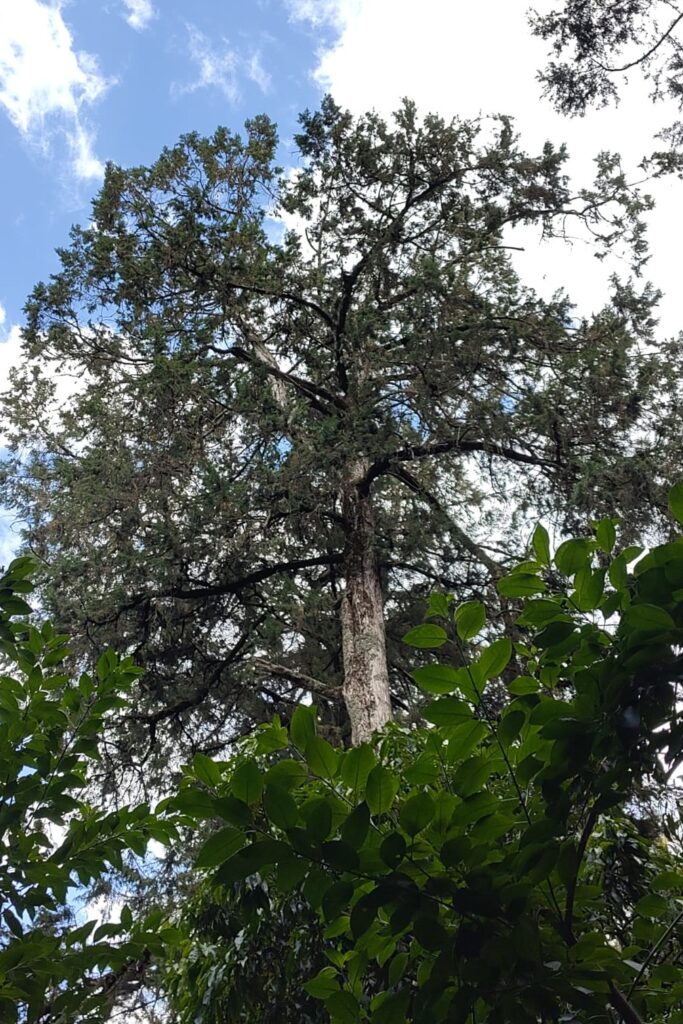
African cedar (Juniperus procera) is one of Mount Elgon’s most striking highland trees, easily recognized by its tall, straight trunk and fragrant reddish-brown timber. Growing in the cooler montane zones, these graceful conifers form elegant spires that rise above the forest canopy. Their small, scale-like leaves and textured bark give them a timeless, ancient appearance. On Mount Elgon, cedar forests create peaceful, cathedral-like spaces and provide important habitat for birds and shade-loving plants—making them a memorable highlight of any forest walk.
Croton
Croton trees add a splash of brightness to Mount Elgon’s forest scenery. Known for their pale, textured bark and broad, often glossy leaves, these fast-growing trees thrive along forest edges, riverbanks, and sunny clearings. On Mount Elgon they play a key ecological role—enriching the soil, offering shade for young plants, and producing nectar-rich flowers that attract bees, butterflies, and birds. Their light, airy crowns and distinctive foliage make Croton easy to spot and a charming addition to the mountain’s diverse tree community.
Elgon Teak
Elgon teak (Olea welwitschii, also known as Elgon olive) is one of Mount Elgon’s signature highland trees, deeply tied to this mountain’s identity. Towering in the montane forests between approximately 1,500 – 2,500 m, it forms dense, straight trunks that are central to the forest’s structure. While the species does occur elsewhere in Africa, on Mount Elgon it reaches a special prominence — it is so closely associated with the mountain’s ecosystem and history that it often goes by its local name, “Elgon” teak.
Euphobia
Euphorbia species on Mount Elgon are a fascinating group of plants that range from small shrubs to tree-like forms. Recognizable by their often succulent stems and milky sap, they thrive in the mountain’s drier forest edges, rocky slopes, and moorlands. On Mount Elgon, euphorbias play an important ecological role, providing shelter and food for insects and small birds, while their striking shapes and unusual foliage add a dramatic and sometimes otherworldly touch to the landscape. Many species also have seasonal flowers that bring subtle bursts of color to the forest and highland slopes.
Olea africana
The African olive (Olea africana) is a hardy, evergreen tree that thrives in the mid-altitude forests and woodland edges of Mount Elgon. Its small, grey-green leaves and gnarled, characterful trunks give it a distinctive look, and it’s well adapted to the mountain’s cool, seasonally misty climate. On Elgon, African olive often grows alongside podo, Elgon teak, and other highland species, forming an important part of the natural forest mosaic. Its fruits attract birds and wildlife, while its resilient wood and graceful branching make it one of the mountain’s most recognizable and enduring trees.
Podocarpus
Podocarpus species on Mount Elgon form some of the mountain’s most stately pine, rising as large, evergreen trees in the montane forest. One key species, Podocarpus milanjianus, grows straight and tall, with narrow, glossy green leaves and a conical silhouette.
On Mount Elgon, Podocarpus often appears in mixed stands with olive, bamboo, and other highland trees, particularly around the 2,400 – 3,000 m belt. Their dense foliage provides important habitat for birds and other wildlife, and their ancient, towering trunks add a deeply forested, almost primeval character to the mountain’s slopes.
Prunus africana
Prunus africana, also known as the African cherry, is a prominent highland tree on Mount Elgon and an important part of the mountain’s natural forest. Recognizable by its dark, rugged bark and glossy, serrated leaves, it thrives in the cool, moist montane zones. In season it produces clusters of small white flowers followed by dark red to black cherries that attract birds and other wildlife. Prunus africana is also valued for its medicinal bark, making its presence in Mount Elgon both ecologically and culturally significant. Its sturdy form and vibrant foliage add depth and character to the forest landscape.
Rosewood
Rosewood (commonly represented in East Africa by Dalbergia species) adds warmth and richness to Mount Elgon’s forest mix. Known for its beautifully colored, fine-grained timber, rosewood grows as a medium-sized tree with smooth bark and a rounded crown of delicate, compound leaves. On Mount Elgon it thrives in the lower and mid-elevation forests, where the soils are deep and well-drained. Its sweet-scented wood, attractive foliage, and seasonal flushes of small flowers make it a subtle but beautiful presence in the forest, contributing to both biodiversity and the mountain’s natural charm.
Wabugia Ugandensis
Wabugia Ugandensis is a tall, fast-growing hardwood tree found in the montane forests of Mount Elgon. With its straight trunk and broad, spreading crown, it contributes to the dense canopy that defines the mountain’s highland forests. Its compound leaves and small, fragrant flowers attract birds and insects, supporting the local ecosystem. Valued for its durable timber, Wabugia ugandensis plays both an ecological and economic role, while its presence adds to the diversity and richness of Mount Elgon’s unique forest landscapes.
Flowers
Mount Elgon is also home to a dazzling variety of flowers, from delicate shrubs to giant moorland blooms. Across the forest edges and high-altitude moorlands, you’ll find vibrant patches of heathers, lobelias, and everlastings that add bursts of color to the green landscape. These flowers not only enhance the mountain’s beauty but also support a rich array of pollinators, making every hike a chance to witness the mountain’s lively and colorful plant life up close.
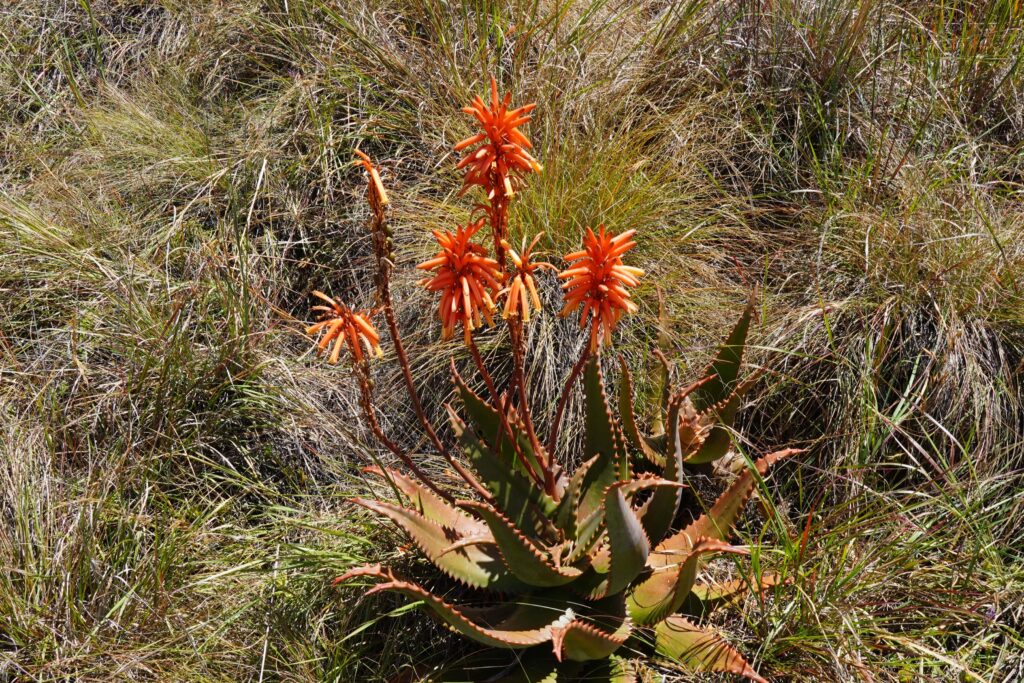
Aloe Vera
Senecio species are a distinctive feature of Mount Elgon’s high-altitude moorlands. These hardy, often shrubby plants are adapted to the cold, misty conditions, with silvery or woolly leaves that help conserve moisture and protect them from harsh sunlight. Many produce clusters of bright yellow flowers, adding cheerful color to the moorland landscape. Senecios not only enhance the visual beauty of Mount Elgon’s peaks but also provide shelter and food for insects and birds, playing a vital role in the mountain’s alpine ecosystem.
Cenecio
Senecio species are a distinctive feature of Mount Elgon’s high-altitude moorlands. These hardy, often shrubby plants are adapted to the cold, misty conditions, with silvery or woolly leaves that help conserve moisture and protect them from harsh sunlight. Many produce clusters of bright yellow flowers, adding cheerful color to the moorland landscape. Senecios not only enhance the visual beauty of Mount Elgon’s peaks but also provide shelter and food for insects and birds, playing a vital role in the mountain’s alpine ecosystem.
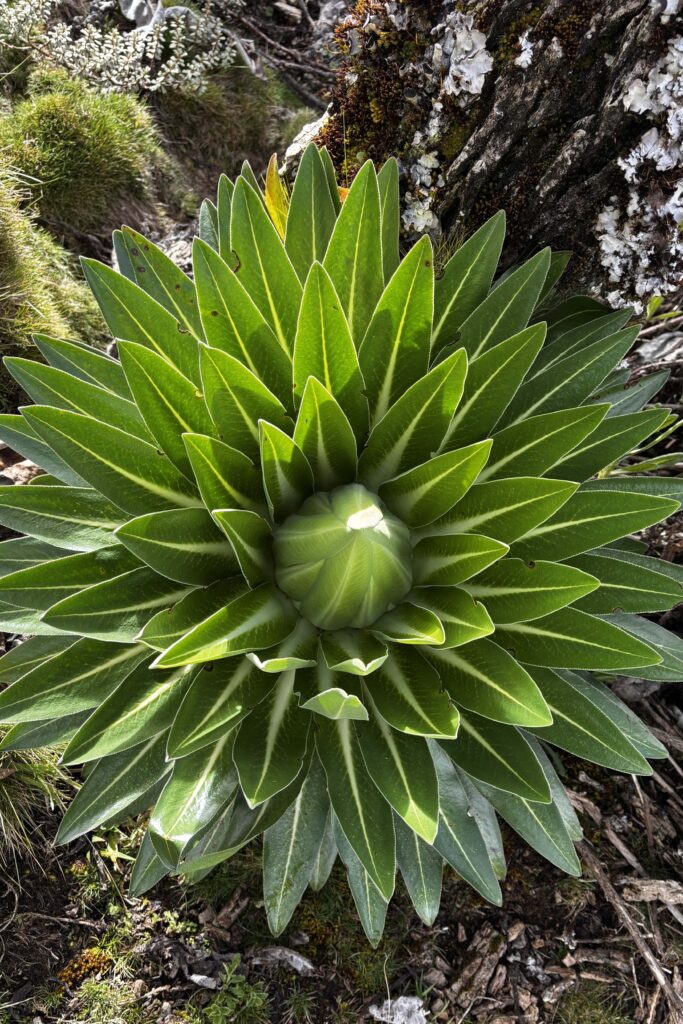
Giant lobelia
Giant lobelia (Lobelia deckenii and related species) is an iconic plant of Mount Elgon’s high-altitude moorlands. Towering up to several meters, these dramatic rosettes of thick, succulent leaves often bloom with tall spikes of blue or purple flowers. Adapted to the cold, misty mountain environment, giant lobelias provide shelter for insects and small birds while creating a surreal, almost otherworldly landscape for hikers. Their unusual size and striking form make them one of the most memorable and unique floral highlights of Mount Elgon.
Red Hot Poker
Red hot poker (Kniphofia species) is one of Mount Elgon’s most striking flowers, instantly recognizable by its tall spikes of fiery red, orange, or yellow tubular blooms. These vibrant flowers stand out against the green highland grasslands and moorlands, attracting sunbirds and other pollinators with their nectar. Their dramatic appearance and bold colors make red hot pokers a favorite for photographers and nature lovers, adding a splash of energy and life to the mountain’s floral tapestry.